Showing posts with label Amanda Cabot. Show all posts

Wednesday, March 23, 2022

The Allure of "Once Upon A Time" By Historical Author Amanda Cabot


Amanda Cabot has released her latest novel, The Spark of Love
her final book in the Mesquite Springs Trilogy.

The Allure of “Once Upon a Time”

Although I read in a variety of genres, from early childhood on, my favorite stories were those that began “once upon a time.” Yes, I’m a self-proclaimed fan of historical novels, which is why I read and write them. And although historicals go in and out of favor, there is a strong core of readers who share my love for them.

Why? What’s the appeal? I don’t claim to speak for everyone, but I believe there are five reasons for the enduring popularity of books set in times gone by.


They allow us to escape to a different era. While it’s true that contemporary fiction provides a form of escapism, it’s not as strong as becoming immersed in a totally different time. When modern life weighs on us as it has so often over the past few years, being able to spend a few hours in another time can be the change we need to help us put aside our worries for a while.

They allow us to experience a different lifestyle. You can argue that most historicals present an idealized version of life in a different time, and they do, but it’s for a good reason. After all, who wants to dwell on the absence of indoor plumbing and central heating? What a well-researched historical does is give us a glimpse into the way people lived, the hardships they endured as well as the joys they found in living in a small town, on a ranch, or in a castle.

They give us the opportunity to learn something new. We read for information or entertainment or both. While fiction is primarily a source of entertainment, a bit of information is a bonus and makes the story more enjoyable, at least for me. My favorite historicals are the ones that teach me something, as long as it’s done subtly. I’ve loved learning that actresses during the War of 1812 used melted wax instead of mascara and that high-button shoes had ten buttons up the side.

They let us see how others have faced problems similar to our own. I’ve been surprised by how many readers have told me that watching my characters survive heart-wrenching events has given them more comfort than studying self-help books. I believe that’s because historicals provide a buffer, what I refer to as the safety of distance, that makes the experience less traumatic to the reader without decreasing the impact of the characters’ struggles and survival.

They reassure us that people are fundamentally the same, regardless of when they lived. We may wear different clothes, live in different kinds of houses, eat different foods, but underneath the outward trappings, we have the same wants and needs. This affirmation of a common humanity can provide comfort and is, I believe, one of the appeals of “once upon a time.”

What do you think? Do you agree with me? If not, why not?

 

The Spark of Love
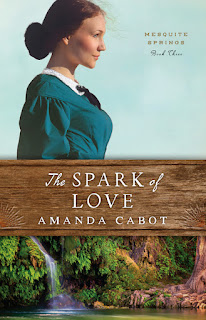

She’s determined to start a new life in the West . . . if only the old one will leave her alone

When a spurned suitor threatens her, heiress Alexandra Tarkington flees New York for Mesquite Springs in the Texas Hill Country, where her father is building a hotel. But the happy reunion she envisions is not to be as her father insists she return to New York. Instead, Alexandra carves out a niche for herself in town, teaching schoolchildren to paint and enjoying the company of Gabe Seymour, a delightful man she met on the stagecoach.

But all is not as it seems. Two men, each with his own agenda, have followed her to Mesquite Springs. And Gabe is an investigator, searching for proof that her father is a swindler.

With so much to lose—and hide from one another—Alexandra and Gabe will have to come together if they are ever to discover whether the sparks they’ve felt from the beginning can kindle the fire of true love.

Buying Links

Amazon ~ BakerBookHouse ~ Barnes & Noble ~ Christian Book Distributors

Bio
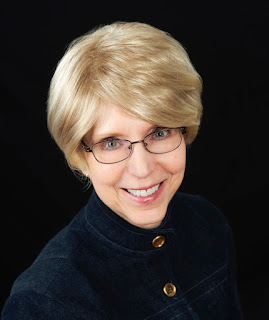
Amanda Cabot is the bestselling author of more than forty books and a variety of novellas. Her books have been honored with a starred review from Publishers Weekly and have been finalists for the ACFW Carol Award, the HOLT Medallion, and the Booksellers’ Best.

Find Amanda

Website

Facebook

Twitter

Blog


Monday, March 9, 2020

R&R: Raves and Rants by Multi-Published Author Amanda Cabot


The Affect of a Hoard on Newly-Sprouted Grass

Did you cringe when you read the title? I certainly did when I wrote it, but I wanted to snag your attention for my rant about confused and misused words.

I’ll be the first to admit that English is not an easy language, but the confusion between homonyms and the misuse of words with similar pronunciations is becoming so common that I had to rant.


There are two badly misused words in my title: “affect” and “hoard.” Let’s start with the easier one, “hoard.” “Hoard” is both a noun and a verb. The problem is that as a noun, it’s often confused with “horde,” although the two have very different meanings.

The Nouns
Noun
Definition
Example
Hoard
A supply or fund stored up and often hidden away
The chipmunk had a hoard of acorns hidden under the tree in preparation for winter.
Horde
A teeming crowd or throng
The hordes of rioting citizens broke store windows and began looting.

See what I mean about the two nouns having very different meanings? And, while Spellchecker will flag many errors, the incorrect use of hoard vs. horde isn’t one of the mistakes it catches.

The Verb
Verb
Definition
Example
Hoard
To lay up a hoard
The chipmunk hoarded acorns under the tree.

Note that the verb has the meaning you would expect. It’s the action of creating a hoard. “Horde” is never a verb.

That was relatively simple. “Affect” is considerably more complex. Like “hoard,” it’s both a noun and a verb. Like “hoard,” it’s often confused with another word, in this case “effect.” The similarities end there. “Effect” is also both a noun and a verb. What makes these two words even more confusing is that the nouns and verbs are not as closely related as you might expect.

When you see the word “change,” whether it’s a noun or a verb, you know that you’re dealing with some type of alteration. The same is true of many other words that are both nouns and verbs, including “hoard.” Unfortunately, that’s not the case with “affect” and “effect,” which is one of the reasons why these words are misused so often.

The Verbs
Verb
Definition
Example
Affect
To put on a pretense
He affected an air of nonchalance he was far from feeling.
To produce an effect
The blizzard affected air travel across the West.
Effect
To bring about
Though she tried, she was unable to effect a change in the company’s hiring policies.

Though both verbs are used in ordinary language, the most commonly used is the second definition of “affect.”

If relationships between these verbs and their nouns were as close as they are for many English words, you might expect the noun “affect” to be something produced by the second definition of the verb “affect,” changing the familiar phrase “cause and effect” into “cause and affect.” That might seem logical, but I never said English was a logical language.

Here are the correct definitions of “affect” and “effect.”

The Nouns
Noun
Definition
Example
Affect
An observed emotional response Note: This is a technical term used in psychology and psychiatry and is rarely used in ordinary speech or writing.
She maintained the same affect throughout her therapy.
Effect
Something that inevitably follows an antecedent, as in a cause and effect
The blizzard had the effect of closing major airports.

It’s only been in the past year or so that I’ve seen “affect” commonly used as a noun, and each time I see it, I shake my head in dismay, wondering why the author chose that word. In many instances, the author used it as a synonym for “appearance,” perhaps thinking that “affect” made her sound more educated. If so, she would have been disappointed in my reaction, because I felt she was like Amy March from Little Women, affecting a level of sophistication she did not possess. (Note that I used the first definition of the verb “affect” in that sentence.)

The good news is that Spellchecker will flag the erroneous use of “affect” as a noun, although it does not distinguish between the correct and incorrect use of either “affect” or “effect” as a verb.

Let’s return to the title of this post. Does “The Observed Emotional Response of a Hidden Store on Newly-Sprouted Grass” make any sense? Of course not. On the other hand, if I’d written, “The Effect of a Horde on Newly-Sprouted Grass,” there would have been no reason to rant, because you’d have had no trouble imagining a crowd causing trampled grass.

Be careful with the words you use. They’re not interchangeable.

~ Amanda

Bio:
Amanda Cabot’s dream of selling a book before her thirtieth birthday came true, and she’s now the author of more than thirty-five novels as well as eight novellas, four non-fiction books, and what she describes as enough technical articles to cure insomnia in a medium-sized city. Her most recent release, Out of the Embers, introduces readers to the fictional town of Mesquite Springs, Texas, where danger just might lurk.”
Her inspirational romances have appeared on the CBA and ECPA bestseller lists, have garnered a starred review from Publishers Weekly, and have been nominated for the ACFW Carol, the HOLT Medallion, and the Booksellers Best awards. A popular workshop presenter, Amanda takes pleasure in helping other writers achieve their dreams of publication.
Find Amanda:


Friday, January 24, 2020

A Recap Of All Amanda Cabot's Raves & Rants Posts

Amanda Cabot, a multi-published author in several genres and would-be grammar guru, has created a series of posts I consider to be keepers. I've printed them out and placed them in my own grammar notebook, and I've heard from many of my readers that they have done the same.

So to make it easy for everyone, I'm listing her posts her along with links. You can bookmark this post or go to each post and print. Either way, these are an invaluable source for help. 


August 12, 2019 The Common Comma


Bio:
Amanda Cabot’s dream of selling a book before her thirtieth birthday came true, and she’s now the author of more than thirty-five novels as well as eight novellas, four non-fiction books, and what she describes as enough technical articles to cure insomnia in a medium-sized city.
Her inspirational romances have appeared on the CBA and ECPA bestseller lists, have garnered a starred review from Publishers Weekly, and have been nominated for the ACFW Carol, the HOLT Medallion, and the Booksellers Best awards. A popular workshop presenter, Amanda takes pleasure in helping other writers achieve their dreams of publication.
Find Amanda:


Monday, December 9, 2019

R&R: Raves And Rants From Multi-Published Author Amanda Cabot


The Final Rant

As the title says, this will be my final rant or at least my final scheduled rant. As much as I’ve enjoyed discussing grammatical errors and seeing your reactions to the posts, I’m reaching the end of my list of subjects. And, just as importantly, I discovered a book that explains grammar far better than I could hope to. If you haven’t already read Dreyer’s English by Benjamin Dreyer, I suggest you put it on your absolutely-positively-must-read list. It’s both entertaining and informative.


Today’s post will be a potpourri, filled with items that have annoyed me but weren’t substantial enough to warrant individual posts.

Mismatches
The rule is simple. A singular subject requires a singular verb. If the subject is plural, the verb must also be plural. Then, why did I find the following in print?
·         A little spit and shine on the outside and some renovations on the inside was all that was needed.
   We clearly have a plural subject here – “spit and shine” plus “renovations” – so the verb should also be plural.

What do you think about this sentence?
·         Gone were the boyish good looks and in its place was stunning rugged appeal.
I have no problem with the singular verb in the second half of the sentence, since the subject of that clause is “stunning rugged appeal,” which is singular, but I take exception to “in its place.” The author obviously knew that “good looks” was plural, because she used “were” in the first clause. Why, then, didn’t she say “in their place”?

Improbable Dialogue Tags
You know what I mean by dialogue tags, don’t you? They’re the “he said/ she saids” that precede or follow a line of dialogue. Correct dialogue tags include “whispered, asked, exclaimed” and a host of other verbs, all of which describe an aspect of speaking. Sometimes, though, I encounter sentences like the following.
·         “Jane packed your bag,” Susan nodded to the nylon suitcase in the corner.
·         Steve smiled, “Your dog is climbing on the chair again.”
What’s wrong with these? A person cannot nod or smile a line of dialogue. Correcting these errors is simple: substitute periods for the commas, creating stage directions rather than dialogue tags.

Misplaced Clauses
We’ve discussed clauses in the past, but a refresher never hurts. To avoid ambiguity or sometimes amusing errors, clauses need to be placed next to the nouns they modify.
·         Mother predicted an angel would fall out of the sky meant just for Jake.
Did the author mean to say that the sky was meant for Jake? I doubt it. The meaning would have been unambiguous if the author had said, “an angel meant just for Jake.”

Here’s another:
·         She forced herself not to look in Antonia’s direction who was nearly twenty years Michael’s junior.
Not only is this awkward, but the direction is NOT twenty years younger than anyone. Why didn’t the author simply say, “in the direction of Antonia, who was …”?
Miscellaneous Errors
·         The both of them were seated at the table.
What’s wrong with that? “Both” is a pronoun. It does not – repeat after me, it does NOT – need an article before it. You wouldn’t say, “the either of them,” would you? The sentence should begin with either “Both of them” or “The two of them.”
·         She reverted her gaze back to the path.
Does that bother you? “Revert” means to return, so there is no need to add the word “back.” It’s superfluous.

Anachronisms
We’ll end with one of my pet peeves, an anachronism. This is from a book that takes place in an aristocratic London household in 1861. The duchess is addressing a servant and asks, “What part of ‘no’ was not clear?”

Did you laugh? I did, but I also stopped reading the book at that point and made a mental note to avoid everything written by the same author. That’s hardly the reaction the author wanted, but it is the reason I’ve written these posts. I don’t want you to make mistakes that will cause readers to laugh for the wrong reasons.

Grammar is important. I’d go so far as to say that good grammar is the hallmark of a professional author, and that makes it essential. If you’re not confident that your grammar is correct, read Dreyer’s English or hire an editor, but, please, please don’t make me laugh at your mistakes.

Amazon

~Amanda


Headshot Of Amanda Cabot
Bio:
Amanda Cabot’s dream of selling a book before her thirtieth birthday came true, and she’s now the author of more than thirty-five novels as well as eight novellas, four non-fiction books, and what she describes as enough technical articles to cure insomnia in a medium-sized city. Her inspirational romances have appeared on the CBA and ECPA bestseller lists, have garnered a starred review from Publishers Weekly, and have been nominated for the ACFW Carol, the HOLT Medallion, and the Booksellers Best awards. A popular workshop presenter, Amanda takes pleasure in helping other writers achieve their dreams of publication.
Find Amanda:

Amanda's Latest Book:
A young woman with a tragic past has arrived in town . . . and trouble is following close behind

Ten years after her parents were killed, Evelyn Radcliffe is once more homeless. The orphanage that was her refuge and later her workplace has burned to the ground, and only she and a young orphan girl have escaped. Convinced this must be related to her parents’ murders, Evelyn flees with the girl to Mesquite Springs in the Texas Hill Country and finds shelter in the home of Wyatt Clark, a talented horse rancher whose plans don’t include a family of his own.

At first, Evelyn is a distraction. But when it becomes clear that trouble has followed her to Mesquite Springs, she becomes a full-blown disruption. Can Wyatt keep her safe from the man who wants her dead? And will his own plans become collateral damage?

Suspenseful and sweetly romantic, Out of the Embers is the first in a new series that invites you to the Texas Hill Country in the 1850s, when the West was wild, the men were noble, and the women were strong.

Pre-Order Amanda's Latest Book Now: